 Version No.2
-
 V
V
-
 فندق سوفوتيل نايل داون تاون- القاهرة


Final report on the 10th Arab Lawyers Conference
Introduction
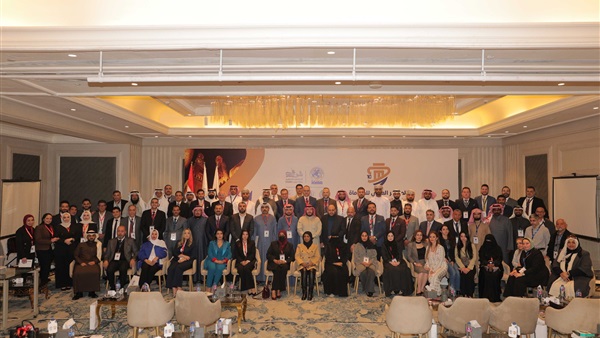
Cairo hosted the 10th Arab Lawyers Conference at the Sofitel Nile Downtown Cairo Hotel from February 7-8, 2026. The conference witnessed a distinguished attendance of lawyers and a select group of legal experts and specialists from 14 different countries.
This edition of the conference holds special significance as it celebrates a full decade since its inception in 2017, giving this year a unique dimension and an exceptional character.
Conference Objectives:
- To raise awareness among lawyers about the importance of professional marketing as an integral part of modern legal practice.
- To present international best practices in responsible legal marketing and their application within the Arab context.
- To examine the relationship between professional standards and the demands of competition in the Arab legal market.
- To empower law firms and companies to develop their corporate identity and marketing strategies in a professional and ethical manner.
- To highlight the role of technology and artificial intelligence in client relationship management and the development of legal work.
- To launch an Arab Charter for Responsible Professional Marketing that promotes values and regulates promotional practices within the profession.
Participants and Attendees:
The conference was attended by approximately 100 participants from fourteen Arab countries, including lawyers, legal advisors, and members of government bodies.
Participating Nationalities:
Egypt, Kuwait, Saudi Arabia, Qatar, Libya, Lebanon, Oman, Jordan, Sudan, Yemen, the United Arab Emirates, Iraq, Syria, and Tunisia
Participating Entities:
- Kuwait Lawyers Association
- Oman Lawyers Association
- Beirut Bar Association
- Wazen Platform
- Legal Community MENA
- Thomson Reuters
- LAWASIA
- Law Vision
Speakers:
The conference attracted a distinguished group of legal experts and legal marketing specialists, most notably:
- Dr. Adnan Abel, President of the Kuwaiti Lawyers Association.
- Mr. Tawfiq Noueiri, representative of the Beirut Bar Association, Head of Arab Relations and Affairs, and Assistant Secretary-General of the Arab Lawyers Union.
- Mr. Muhannad Al-Amri, representative of the Omani Lawyers Association, member of its Board of Directors, and Head of the Association's Training Committee.
- Dr. Mohamed Sameh Amr, Dean of the Faculty of Law at Cairo University and Founding Partner of Amr & Partners Law Firm.
- Dr. Ahmed El-Sawy, Founding Partner of Shoura Law Firm and Arbitration.
- Dr. Adly Hammad, Partner at Hammad & Al-Mahdar Law Firm and Legal Consultants.
- Attorney Khalifa Al-Yaqout, Managing Partner of Al-Yaqout & Al-Fawzan Law Firm.
- Attorney Ahmed El-Sharkawy, Founding Partner of Sharkawy & Sarhan Law Firm.
- Attorney Ahmed Barakat, Senior Partner at ASAR.
- Dr. Ehab Muslim, Marketing and Business Administration Consultant.
- Ms. Nouran Nazer, Mental Health and Psychological Counseling Consultant.
- Mr. Ayman Fouda, Director of Law Vision and Specialist in Legal Marketing.
- Mr. Ayman El Sherbiny, CEO of Influence-me and Specialist in Personal Marketing.
- Mr. Mohab Saeed, a specialist in legal technology (Legal Tech) and founder of the SynQanun platform.
Events and Sessions:
Opening Session:
The conference opened with a welcoming address by lawyer Walid Othman, the conference secretary-general. He began by welcoming the attendees and participants, expressing his gratitude for their engagement and participation. He also provided an overview of the conference's themes, highlighting the importance of the topic and its impact on the professional marketing of law firms in the Arab world.
This was followed by speeches from representatives of the conference's supporting organizations. These speeches addressed the current state of professional regulation of the legal profession in their respective countries, the practical challenges associated with regulating and organizing legal marketing, and presented several proposals aimed at developing the legislative and professional frameworks governing the profession.
In a tradition established by the Arab Lawyers Conference, prominent legal figures who have had a clear impact and extensive professional contributions to the development of the legal profession and legal and institutional work are honored.
The conference was honored by honoring a distinguished legal figure who contributed an active role in organizing and developing the legal profession in the Kingdom of Saudi Arabia, namely Dr. Osama Al-Qahtani, Chairman of the Board of Directors of the Lawyers Authority Center for Settlement and Arbitration affiliated with the Saudi Lawyers Association, and the former General Supervisor of the Saudi Lawyers Association.
The first session, "Law Firms Between Corporate Identity and Market Demands":
addressed the concept of corporate identity for law firms. It explored the impact of amendments to the Saudi Arabian legal profession law on competition within the legal market and discussed the effect of merger decisions on the identity and professional image of law firms.
The session also highlighted the role of artificial intelligence in shaping the corporate identity of law firms, the extent to which internal policies govern its use, and the importance of platforms for ranking law firms and lawyers. It examined their role in building or damaging professional reputation and the fairness of the evaluation process within these platforms.
The second session, "Developing Legal Businesses and Growth Strategies in an Era of Competition":
addressed fundamental shifts in law firm growth models. It discussed the difference between genuine business development and superficial publicity, the limitations of professional marketing in the legal sector, and key performance indicators (KPIs) for business development. The session also touched upon the challenges of building a law firm from scratch, the transition from practicing lawyer to corporate manager, and the nature, validity, and effectiveness of partnerships in the legal market.
Furthermore, the session explored the reality of the Arab legal market, examining the interplay between actual saturation and the problematic business model. It considered the impact of reputation versus corporate structure on firm growth, the limits of expansion between necessity and risk, and contemporary challenges such as artificial intelligence, fee pressures, increased client awareness, and the relationship between the number of cases and their quality and strategic value.
The first workshop, "Marketing Strategies for Law Firms":
addressed the concept of marketing as a cornerstone of any organization's success, highlighting its role in building a positive image, fostering trust, and ensuring sustainable institutional growth. It then moved on to explain the importance of marketing within the legal context, correcting several common misconceptions among lawyers, most notably the confusion between professional marketing and unprofessional advertising.
The workshop also discussed the traditional view that marketing is detrimental to the legal profession, emphasizing that the profession, as a noble calling, does not preclude the use of disciplined, professional marketing tools that uphold the profession's ethical values, contribute to regulating relationships with the public, enhance trust, and build a professional institutional presence for law firms in the legal market.
The second workshop, "Mental Health for Lawyers":
addressed mental health in the legal profession, recognizing it as one of the most significant contemporary challenges facing legal practitioners due to work pressures, caseloads, and the nature of professional responsibility. The workshop discussed the impact of psychological stress and burnout, and the importance of maintaining a work-life balance.
It also highlighted mechanisms for psychological support within legal work environments and the importance of building an organizational culture that supports mental health. Furthermore, it reviewed practical tools for managing stress, developing resilience, and enhancing self-awareness among lawyers, all of which contribute to improving the quality of professional life, increasing performance efficiency, and promoting professional sustainability within law firms.
The third workshop, “Digital Marketing for Law Firms”:
addressed the importance of digital marketing for law firms considering changing client behavior and their increasing reliance on digital channels to find lawyers and legal services. It also highlighted the importance of a lawyer's and law firm's website as a primary professional interface, outlining the professional and technical requirements for legal websites.
Furthermore, the workshop discussed the importance of building a professional and personal brand for lawyers, the role of social media platforms in enhancing professional presence, with a particular focus on LinkedIn, and strategies for building professional profiles that reflect a lawyer's professional image, enabling them to create real job opportunities and expand their professional network effectively and systematically.
The fourth workshop, "Managing Law Firms with Artificial Intelligence":
addressed the practical transformations brought about by AI technologies in legal management and how to effectively utilize them within law firms, given the rapid pace of technological development and the increasing demands of professional work.
The workshop began by explaining the types of AI and their various applications in the legal field, clarifying the differences between search, analysis, and automation tools, and their role in supporting law firm management and improving daily work efficiency.
A significant portion was dedicated to discussing the hidden risks associated with using AI, most notably the phenomenon of "hypnotic effects," while also reviewing best practices that help reduce errors and enhance the reliability of legal outputs.
The workshop included a practical exercise and direct application of how to use AI tools, demonstrating their practical benefits in organizing files, supporting decision-making, and improving time management within the office.
Recommendations:
- Updating the legislation governing the profession and the internal regulations of bar associations to include clear provisions addressing legal marketing, digital presence, and advertising, rather than leaving these matters varying or individual interpretations.
- Developing specialized professional codes of conduct that define what is acceptable and unacceptable in legal marketing, with practical examples, to serve as a reference for both lawyers and regulatory bodies.
- Enhancing training and awareness. Issuing regulations is insufficient; lawyers, especially young lawyers, must be trained to understand how to build a responsible professional presence and use digital tools in a way that serves the profession and their practice without harming it.
- Achieving a balance between values and competition. Legitimate competition does not contradict professional values; rather, regulating it protects everyone and strengthens public trust in lawyers as trustworthy advisors, not as commercial promoters.
- The use of artificial intelligence within law firms is a supportive administrative and organizational tool, indispensable for improving performance and increasing efficiency. However, it cannot replace the human element, nor can it ever replace the essential role of the lawyer in legal analysis, decision-making, and assuming professional responsibility.
- Law firms should deal consciously with professional ranking platforms as tools for showcasing, not creating, their professional image, and professional reputation should not be reduced to ranking indicators alone.
- Partnerships should be viewed as strategic tools for growth and expansion, provided they are based on genuine integration of vision, values, specializations, and business models.
- A clear distinction must be made between genuine business development, based on building relationships, value, and long-term trust, and superficial publicity that does not produce real growth or institutional sustainability.
Conclusion:
The 10th Arab Lawyers Conference was a resounding success in terms of participation and engagement and contributed to opening new avenues for dialogue and the exchange of expertise among lawyers and legal experts from across the Arab world.
The International Academy for Mediation and Arbitration reaffirm its commitment to continuing to organize similar events aimed at developing the legal profession in the Arab world.
Mailing List
Mailing List